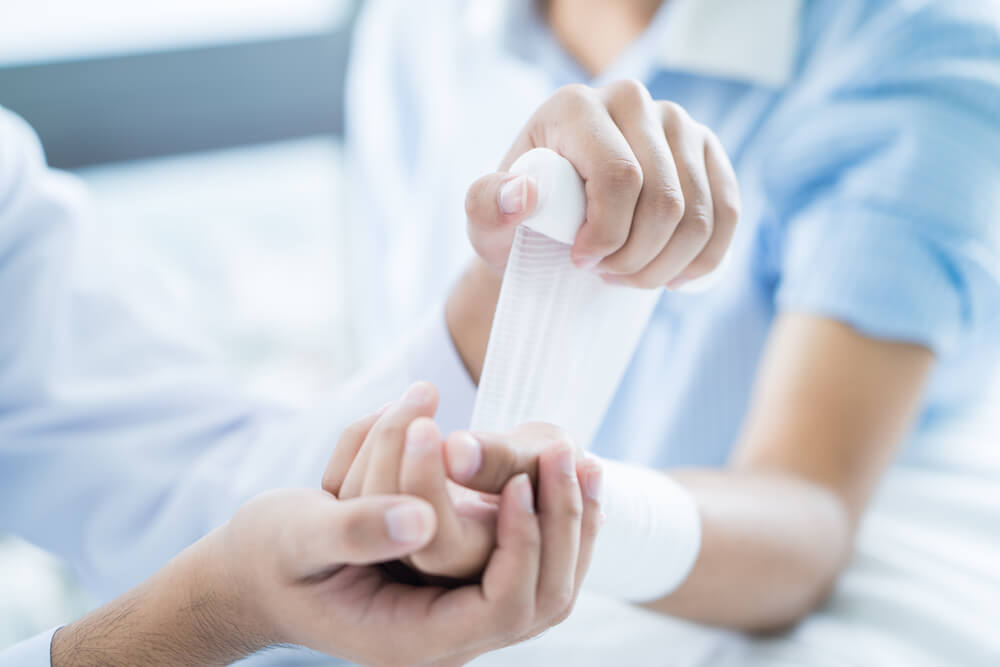
You’re cooking dinner, and suddenly the knife slips. Your child takes a tumble at the playground. You’re working in the garage and something sharp catches your hand. In these heart-pounding moments, when you see blood and aren’t sure how bad it really is, your mind races with questions: Is this serious enough for the emergency room? Can I handle this at home? What if I make the wrong choice?
We get it — these situations are never planned, and they always seem to happen at the worst possible times. That’s exactly why Complete Care exists. We’re not just here to patch you up; we’re here to give you peace of mind and expert wound care when you need it most.
The truth is, knowing when to go to the ER for cuts and lacerations can be tricky, even for the most level-headed person. That’s why we’ve made it our mission to be accessible when emergencies strike. With multiple ER locations ready to serve you, you’ll never have to drive across town wondering if your injury is getting worse. Let us take the guesswork out of wound emergencies — because when it comes to your health, you deserve clear answers and quality care.
For life-threatening situations, please call 911.
Table of Contents
- What type of wound is considered an emergency?
- How to care for an open wound before going to the ER
- Should I go to the ER for wound care?
- What to do if a wound becomes infected
What type of wound is considered an emergency?
Not every cut or scrape needs a trip to the emergency room, but some wounds definitely shouldn’t wait until tomorrow. Generally, if a wound won’t stop bleeding after 10–15 minutes of direct pressure, is deeper than a quarter-inch, or has jagged edges that won’t stay closed on their own, it’s time to seek immediate medical attention. When in doubt, it’s always better to err on the side of caution.
Types of wounds that require emergency care:
- Puncture wounds
- Avulsion injuries (when skin or tissue is partially or completely torn away)
- Crush wounds
- Burns
- Bite wounds
- Wounds with embedded objects
Types of lacerations needing immediate attention:
- Deep cuts
- Gaping wounds
- Long cuts
- Facial lacerations
- Joint or tendon cuts
- Cuts on sensitive areas like the genitals
- Heavily bleeding cuts
The bottom line? Trust your instincts. If a wound looks scary to you or seems beyond basic first aid, don’t hesitate to seek professional medical care. Our emergency team would much rather see you for peace of mind than have you wait and risk complications later.
How to care for an open wound before going to the ER
When you’re dealing with serious wounds and lacerations, taking the right steps can help control bleeding, prevent infection, and potentially save tissue that might otherwise be damaged. Remember, these are temporary measures to stabilize the situation — they’re not meant to replace professional medical treatment.
- Stay calm and call for help: Have someone drive you if possible, or call 911 for severe injuries.
- Control the bleeding: Apply firm, direct pressure to the wound with a clean cloth or bandage.
- Don’t remove embedded objects: If something is stuck in the wound, leave it alone and stabilize it with bandages around it.
- Elevate if possible: Raise the injured area above heart level to help slow bleeding (only if no broken bones are suspected).
- Keep the wound clean: Avoid touching the wound with dirty hands, but don’t worry about cleaning it thoroughly — that’s for the medical team.
- Apply a clean bandage: Cover the wound with sterile gauze or a clean cloth, but don’t wrap too tightly.
- Monitor for shock: If another person was cut, watch for pale skin, rapid breathing, or feeling faint, and keep them lying down if needed.
While it’s natural to feel panicked, remember that you’re buying valuable time for the medical professionals to do their work. Every minute you spend properly caring for the wound before arrival is an investment in better healing.
Should I go to the ER for wound care?
This is the most common question we hear, and honestly, it’s one of the hardest decisions to make in the moment. When you’re dealing with any of these symptoms, don’t second-guess yourself — it’s time to head to the emergency room right away.
- Uncontrolled bleeding: Blood that won’t stop after 15–20 minutes of direct pressure
- Signs of deep injury: You can see bone, muscle, fat, or tendons through the wound
- Numbness or inability to move: Loss of feeling or function in the injured area
- Large or gaping wounds: Cuts longer than half an inch or wounds that won’t stay closed
- Embedded foreign objects: Glass, metal, or debris stuck in the wound
- Gunshot wounds: Any injury from a firearm requires immediate emergency care
- Signs of infection: Increasing redness, warmth, swelling, or pus (especially if spreading)
- Location matters: Any wound on the face, hands, joints, or genitals
- Severe pain: Pain that seems out of proportion to the injury
- Animal or human bites: High risk of infection and may need special treatment
- Tetanus concerns: Deep, dirty wounds if you’re not up to date on your tetanus shot
If you’re on the fence about whether your injury needs professional attention, that uncertainty itself is often a good reason to come in and let us take a look. Whether you’re dealing with serious cuts and scrapes or just have the top layer of skin scraped off but are worried about the healing process, our medical team has the training, equipment, and experience to properly assess and treat wounds of all types.
What to do if a wound becomes infected
Even wounds that seem to be healing well can sometimes take a turn for the worse. Infections can develop days or even weeks after an injury, turning what seemed like a minor issue into something that needs immediate medical attention. Here are several signs that your wound may be infected:
- Increasing redness
- Warmth and swelling
- Pus or unusual discharge
- Increased pain
- Red streaking
- Fever or chills
- Delayed healing
- Swollen lymph nodes
If you’re dealing with ER cuts that were treated days ago, are taking care of stitches that suddenly look concerning, or have something as seemingly simple as a small finger cut that won’t stop bleeding and now shows signs of infection, don’t hesitate to seek professional care.
Infections can spread quickly and become dangerous if left untreated, but they’re usually very manageable when caught early. Our medical team is experienced in treating wound infections and can get you back on the path to proper healing.
Learn more about how to tell if a cut is infected
How does the ER treat wounds?
Wound management in an emergency room can be necessary for many reasons other than wound care with stitches. In the emergency room, we can:
- Wound cleaning and preparation: Staff will thoroughly irrigate wounds with saline solution to remove debris, dirt, and bacteria. For deeper wounds, they may need to explore the wound to check for foreign objects, assess damage to underlying structures, and ensure complete cleaning.
- Administer pain medication: The ER can provide immediate pain relief through various methods including topical anesthetics for surface numbing, local injections of lidocaine for procedures, or systemic pain medications (oral or IV) for more severe injuries. They’ll often numb the area before cleaning or suturing.
- IV fluid administration: For patients with significant blood loss, dehydration from the injury circumstances, or those who need IV antibiotics or pain medication, the ER will establish IV access for fluid resuscitation and medication delivery.
- Infection prevention: ERs routinely update tetanus vaccinations if you’re not current (typically every 10 years, or 5 years for dirty wounds). For animal bites, especially from wild animals or unvaccinated pets, they’ll assess rabies risk and may start post-exposure prophylaxis. Antibiotic prescriptions depend on wound type, location, and infection risk factors.
- Close the wound: Beyond basic stitches, ERs use several closure techniques depending on the wound.
- Sutures (stitches): For deeper cuts requiring precise alignment
- Staples: Often used for scalp wounds or long, straight cuts
- Tissue adhesive (medical glue): For smaller, low-tension wounds
- Steri-strips: Adhesive strips for minor cuts that don’t require sutures
- Complex repairs: Multi-layer closure for deep wounds affecting different tissue layers
- Follow-up care instructions: ERs provide detailed wound care instructions including when to change dressings, signs of infection to watch for, activity restrictions, and when to return for suture removal or follow-up care.
Visit Complete Care for professional wound care when you need it most
Complete Care understands that accidents don’t happen on a schedule, which is why we’ve made expert wound care accessible across multiple locations. With convenient emergency centers in Austin, Corpus Christi, Dallas/Fort Worth, East Texas, Lubbock, San Antonio, and Colorado Springs, you’re never far from the professional medical attention you need.
Our experienced medical teams are equipped to handle everything from minor cuts that won’t stop bleeding to serious traumatic injuries requiring immediate intervention. We’ve designed our facilities and trained our staff to provide not just excellent medical care, but also the reassurance and clear communication you need during stressful moments.
Visit any of our emergency locations, and let our medical professionals take the guesswork out of your wound care — because when it comes to your health and safety, you can’t afford to wait.
Locations

Get Complete Care
Open 24/7. No Appointment Needed.